Reclaiming systems. Reclaiming sovereignty.
Operations consulting for Indigenous owned businesses
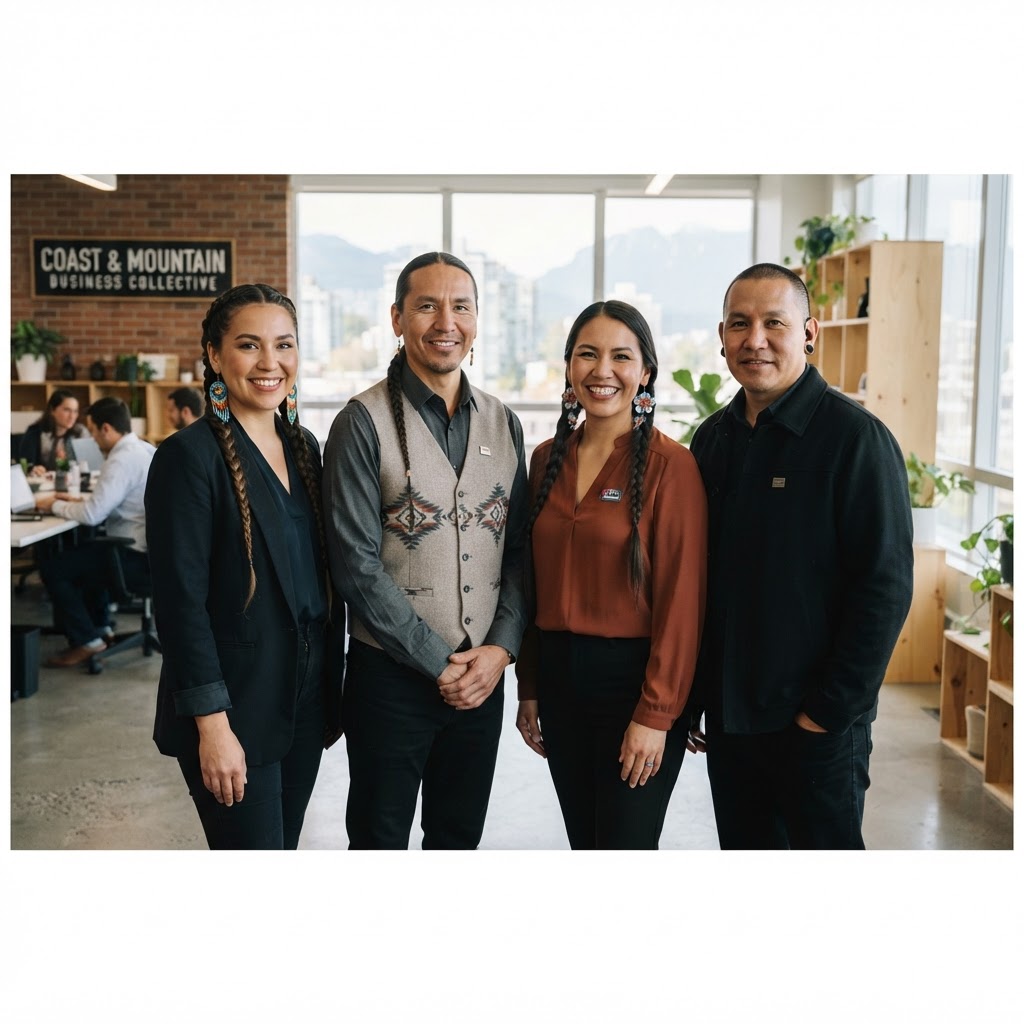
Indigenous-owned business is more than enterprise — it’s sovereignty in practice. For First Nations, Métis, and Inuit entrepreneurs, and Indigenous peoples across Turtle Island and beyond, building a business is a way to reclaim rights, land, and self-determination from systems built to erase them. Late-stage capitalism and the colonial framework weren’t designed for how you work or who you are. I help Indigenous founders build operations that honour your protocols, your communities, and your vision — so your business dismantles the colonial framework instead of replicating it. Because every system teaches people how to behave — and right now, yours might be teaching your team to fit a colonial mold instead of reclaiming your own.
The problem
A framework designed to erase you, asking you to fit
You’re not just running a business — you’re carrying generations of knowledge, protocol, and responsibility, and you’re doing it inside systems that were built to make people like you disappear. The funding structures, the “professionalism” norms, the growth-at-all-costs logic — they weren’t designed for your way of working. So you end up translating yourself constantly, and the cost is real.
You’re navigating colonial systems that weren’t built for your way of working
Community obligations sit alongside commercial ones, with no system to hold both
Funding and “professionalism” norms ask you to justify or shrink your protocols
Your operations exist in memory and oral tradition, not in colonial-style documentation
You’re rebuilding what colonialism tried to dismantle, often from scratch
Capacity is stretched because the work is business, culture, and sovereignty at once
You’re carrying intergenerational responsibility with contemporary tools
Everyone is busy, but no one feels ahead
The approach
Your problems, mapped to solutions
I don’t bring a colonial framework and ask you to fit. I start by understanding your protocols, your community, and your vision for sovereignty — then design operations that hold all of it. I work alongside you, not over you. Here’s what that looks like in practice:
Problem
Colonial Systems, Indigenous Work
The funding structures, contracting norms, and “professional” expectations you navigate were built around colonial assumptions. You spend real energy translating yourself into them, and the friction never lets up.
Solution
We name the colonial assumptions baked into your current systems and design operations that let you work from your protocols — relationships, reciprocity, responsibility — while still meeting the obligations in front of you.
Problem
Community and Commerce in Tension
Your obligations to community and land aren’t separate from your business — they’re part of it. But colonial business systems treat them as distractions, and the tension falls on you to manage alone.
Solution
We build systems that hold community obligations and commercial ones together — decision frameworks, capacity plans, and rhythms that let both live in the same operation instead of competing for your time.
Problem
Knowledge Held in Memory
So much of what makes your business work lives in oral tradition, relationship, and protocol — not in the colonial-style documentation that funding and partners expect. When it’s only in your head, it’s fragile.
Solution
We design knowledge systems that respect what must stay oral and relational while capturing what can be shared — so your operations aren’t fragile, and your knowledge is protected and carried on your terms.
Problem
Rebuilding From Scratch
Colonialism dismantled the systems your economies ran on. You’re not just running a business — you’re rebuilding capacity that was taken, often with contemporary tools that weren’t designed for the work.
Solution
We build operations that grow capacity alongside the business — leadership, systems, and knowledge that strengthen your nation’s self-determination rather than recreating dependence.
The transformation
What “good” looks like
By the time we’re done, your business has changed. Not by making it look like everyone else’s — by making your operations as sovereign as your vision.
Your systems honour your protocols, your community, and your land
Community obligations and commercial ones are held in the same system, not in competition
Knowledge is protected and carried forward on your terms
You can grow your business without growing your dependence on colonial systems
Your team leads from your teachings, not from imported frameworks
The business builds capacity and sovereignty together
Every system teaches people how to behave. If your systems reproduce colonial logic, they’ll teach your people to fit a mold that was never theirs. If they honour protocol, relationship, and responsibility, your people — and your nation — rise to meet them.
What changes
It just hits different
Sovereign
Systems built on your protocols, not theirs
Rooted
Community and commerce held together
Protected
Knowledge carried forward on your terms
Reclaiming
Capacity that builds self-determination
Ideal for: First Nations, Métis, and Inuit entrepreneurs, and Indigenous-owned businesses across Turtle Island and beyond reclaiming systems and sovereignty through enterprise.
Work with me if...
- +You’re navigating colonial systems that weren’t built for your way of working
- +Community obligations and commercial ones feel like they’re in conflict
- +You’re carrying operations in memory while rebuilding what was dismantled
- +Funding and “professionalism” norms ask you to shrink your protocols
- +You want your business to build sovereignty, not just revenue
- +You’re ready for operations that reflect your teachings
I’m not for you if...
- —You want to optimize for extraction over community and land
- —You’re looking to fit into colonial systems rather than transform them
- —You believe a corporate playbook will honour your protocols
- —You want someone to tell you what you want to hear
Common questions
FAQ
Services for indigenous owned businesses
How I can help
Every engagement is tailored to indigenous owned businesses, but the work falls into the services below. Explore the one that fits where you are now.
Other industries I work with
Every engagement is tailored. Explore other industries or head back to the full overview.